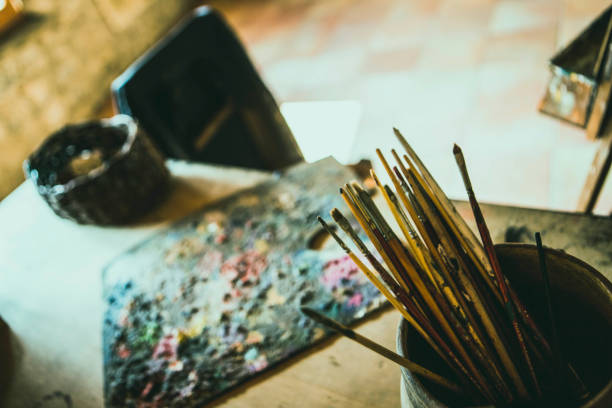
Have you ever felt so upset or worried that you just couldn’t find the right words to say how you feel? Maybe you tried to explain it to a friend or a family member, but the words came out wrong or got stuck in your throat. That’s a really common experience. Sometimes our feelings are so big, so messy, or so confusing that talking about them feels impossible. That’s where art therapy comes in. And one of the simplest, most powerful tools in art therapy is painting. You don’t have to be a good painter. You don’t need fancy supplies. All you need is some paint, a brush, paper, and the willingness to let your hand move.
When a mental health counselor uses painting in therapy, they aren’t trying to turn you into an artist. They’re trying to give you a different way to express what’s going on inside. Think about it. When you’re angry, you might want to punch something. But if you dip a brush in red paint and slash it across a page, that anger can start to leave your body and go onto the paper. You can see it. You can look at it. And that makes it a little less scary. Painting lets your feelings take shape without needing a single word.
I remember working with a woman who had a lot of anxiety about a big change in her life. She could only say, “I don’t know, I’m just stressed.” The counselor handed her a canvas and some blue and black paint and asked her to paint “stress.” At first she laughed and said she couldn’t draw. The counselor told her not to worry about drawing anything real. Just put paint down however it felt right. She started with big messy swirls. Then she added sharp lines. Soon she was painting dark storm clouds and jagged lightning. When she stopped, she looked at the painting and said, “Wow, that’s exactly how my stomach feels.” For the first time, she had a picture of her anxiety. From that picture, she and the counselor could talk about what the storm might need to calm down. Maybe a patch of yellow sky. Maybe a gentle green hill. The painting gave them a way to have a conversation that words alone couldn’t start.
Painting can also help you discover feelings you didn’t even know you had. Sometimes we push down our emotions so deep that we forget they are there. But when you start to paint freely, colors and shapes come out that surprise you. You might find yourself painting a sad face when you thought you were fine. Or you might use bright, happy colors that show a hopeful side you forgot about. The paint doesn’t lie. It’s like a mirror for your inner world. And a counselor trained in art therapy can help you understand what that mirror is showing you. They might ask, “What does this part of the painting feel like?” or “If this color had a voice, what would it say?” Those simple questions open up new ways to heal.
Another great thing about painting in therapy is that it’s safe. You are not trying to make something “good.” You are just making something honest. That takes pressure off. You don’t have to worry about grammar or stuttering or forgetting what you wanted to say. The paint does the talking. And you can always change it. If you don’t like something, you can paint over it. That can feel really freeing. It reminds you that feelings can change, too.
Art therapy is not just for kids. Adults use it just as much. And you don’t need to be a professional or even someone who enjoys art. Many people who never painted before find that it becomes a favorite way to relax and understand themselves. A mental health counselor who uses the art therapy creative approach is trained to guide you step by step. They won’t judge your painting. They won’t tell you what it means. They will help you figure that out for yourself.
So if you have ever felt stuck when trying to talk about your feelings, consider giving painting a try. You don’t need to sign up for a class. You can just get some cheap paints from a store, a pad of paper, and find a quiet spot. Start with a color that matches your mood. See what happens. You might be surprised by what comes out. And if you want to go deeper, look for a counselor who offers art therapy. They can help you use paint as a bridge to better mental health. Sometimes a picture really is worth a thousand words. But in therapy, one honest painting can be worth even more.