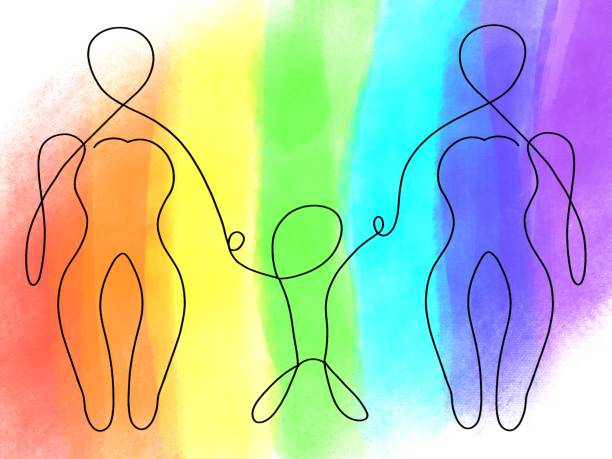
Have you ever felt like you get pulled into family drama even when you try to stay out of it? Maybe you visit your parents for dinner and suddenly you’re eleven years old again, feeling angry or guilty about something that happened years ago. Or maybe you find yourself agreeing with your partner just to keep the peace, even when you don’t really agree. If this sounds familiar, you’re not alone. This is exactly what family therapists call “differentiation of self,” which is a fancy way of saying how well you can stay true to who you are while still staying close to the people you love.
Differentiation comes from a big idea called family systems theory. This theory says that families are like a mobile that hangs over a baby’s crib. When one part moves, everything else moves too. In a family, when one person changes, everyone else feels it. But the goal isn’t to stop moving. The goal is to learn how to move on your own without knocking the whole mobile off balance. That’s differentiation.
Let me break it down simply. Think of differentiation as a seesaw. On one side is your need to be close and connected to your family. On the other side is your need to be your own person with your own thoughts, feelings, and choices. If you lean too much toward the connection side, you might lose yourself. You end up doing what everyone else wants, hiding your true feelings, and feeling like you’re just a copy of your parents or siblings. If you lean too much toward the “me” side, you might push people away, refuse to ask for help, end up lonely, and miss out on the support that family can give. Healthy differentiation is about finding that sweet spot in the middle where you can be close without losing yourself and be yourself without losing your family.
How do you know if you need to work on differentiation? Here are some signs. Do you get super anxious when someone in your family is upset? Do you feel responsible for fixing their problems? Do you change your opinion to match what your partner or parent thinks? Do you avoid talking about things that matter to you because you don’t want to rock the boat? If you answered yes to any of these, you might be low on differentiation. And that’s okay. Most of us start out that way. The good news is that you can learn to differentiate more.
A big part of this is learning to manage your own emotions instead of letting other people’s emotions run your life. Imagine your mom is stressed out about work. She comes home complaining and tense. If you are low on differentiation, you will feel her stress as if it’s your own. You might try to cheer her up, get annoyed at her for being in a bad mood, or feel guilty for not doing enough. All of that is a sign that you aren’t separate from her emotionally. If you are more differentiated, you can say to yourself, “Mom is stressed. That’s her feeling, not mine. I can be kind and listen, but I don’t have to get sucked into her stress. I can stay calm and go about my evening.”
Another piece of differentiation is being able to say what you really think, even when your family disagrees. That’s hard. Families often have unspoken rules like “we don’t talk about politics” or “you should always agree with your father.” But differentiation means you can respectfully say, “I see it differently,” and still love your family and feel loved by them. It doesn’t mean you have to be rude or start a fight. It just means you can hold your own ground without needing everyone else to agree.
For marriage and family therapists, understanding differentiation is super important. When a couple comes in fighting all the time, it’s often because they are too tangled up in each other. They react to every little thing their partner does. They lose their sense of self. A good therapist helps each person get a little more differentiated so they can talk calmly, listen without getting defensive, and make decisions that are good for both people without losing what’s good for themselves.
You don’t have to be a therapist to use this idea in your own life. Try this little exercise. Pick one small thing that matters to you, like what movie you want to watch on Friday night. When your family or partner suggests something else, practice saying, “That sounds fun, but I’d really like to watch this one tonight. Maybe we can take turns.” Notice how it feels in your body. Do you get nervous? Do you want to take it back? That’s normal. Differentiation takes practice. The more you do it, the easier it gets.
The coolest part is that when you become more differentiated, your whole family benefits. When you stop getting pulled into drama, there is less drama. When you stay calm, others around you start to calm down too. You become a steady anchor in the family mobile. That’s a great place to be. It’s not about being cold or distant. It’s about being warm and close while also being strong and clear about who you are. That is the heart of family systems theory, and it’s a skill that can change your relationships for the better.