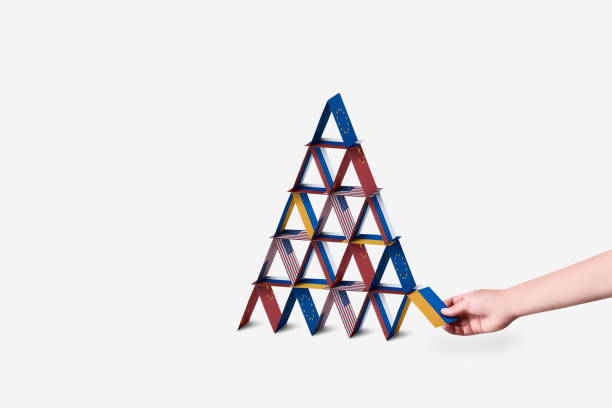
Have you ever noticed that when two people in your family get into a fight, a third person usually gets pulled in? Maybe your mom and dad are arguing about money, and then your mom turns to you and says, “Don’t you think your father is being unfair?” Suddenly you’re stuck in the middle. That’s not an accident. That’s something called a triangle, and it’s one of the most basic ideas in family systems theory.
Family systems theory is a way of looking at your family like a moving, breathing team. Everything one person does affects everyone else. It’s not about blaming anyone because nobody is the “problem.” Instead, it’s about seeing how you all bounce off each other, like balls in a pinball machine. And one of the most common ways that bouncing happens is through triangles.
A triangle happens when a relationship between two people gets stressed out. Instead of dealing with the stress directly, one person brings in a third person to help calm things down. That third person can be a child, a grandparent, a best friend, or even a pet. But when a third person gets pulled in, the original problem usually doesn’t get solved. It just gets spread around.
Let me give you a real example from something that might feel familiar. Imagine you have two sisters, Emma and Lily. They are supposed to clean the kitchen together, but Emma is grumpy because she had a bad day at school. She starts snapping at Lily for not drying the dishes fast enough. Lily gets upset, but instead of telling Emma how she feels, Lily runs to her mom and says, “Emma is being so mean to me for no reason.” Now Mom is in the middle. Mom might talk to Emma, and Emma feels attacked by both Mom and Lily. Now the fight is between Mom and Emma, while Lily steps back and feels like the good kid. That’s a triangle. The original tension between Emma and Lily never got talked about. It just shifted to a different pair.
Triangles aren’t always bad. They can be a way to feel supported when you are hurting. For example, if you are really stressed about a test, you might talk to your older brother to calm down. That’s a triangle between you, the test stress, and your brother. It helps you feel better. But when triangles become a habit, they can keep families stuck in the same old fights for years.
One really important thing to understand is that triangles can be invisible. You might not even realize you are part of one until you step back and look at the pattern. Think about your own family. Is there a person who always gets pulled in when two other people are fighting? Is that person you? Or maybe you are the one who always calls your aunt to complain about your cousin. That’s a triangle too.
Family therapist Murray Bowen, who came up with a lot of these ideas, said that the way to break unhealthy triangles is to learn to stay calm and stay connected without getting pulled in. That means when two people are arguing, you don’t have to take sides. You don’t have to be the referee. You can say something like, “I see you both are upset, and I’m going to give you some space to work it out.” That can feel scary, but it’s actually a gift. It forces the two people to talk directly to each other, which is the only way they can really solve their problem.
Another way triangles show up is when a family has a “special” bond that shuts someone else out. For instance, maybe your dad and your younger brother are super close and always joke around together. That can make your mom feel left out, so she starts complaining to your older sister about how Dad doesn’t pay attention to her. Now a new triangle forms between Mom, older sister, and Dad. Meanwhile, nobody says to Dad, “Hey, I feel a little lonely when you and your brother are always together.” That direct conversation is hard, so people use triangles instead.
The cool part is that once you understand triangles, you can start to see them everywhere — in your family, at school, with friends, even at work someday. You can ask yourself, “Am I being pulled into something that’s not really my fight?” or “Am I using someone else to avoid talking directly to the person I’m actually upset with?” That awareness helps you make better choices.
It’s also helpful to know that triangles can be good if they are “open.” That means you bring in a third person not to take sides, but just to get support or a different view. For example, if you and your partner are stuck in a disagreement, you might go see a family therapist together. That therapist is a third person, but they are trained to help you talk to each other, not to pick a winner. So the triangle becomes a tool for healing, not for hiding.
Families are complicated, and nobody gets it perfect. But the next time you feel like you are in the middle of two people who are upset, pause for a second. Take a breath. Remember that you have a choice. You don’t have to carry everyone’s feelings. You can be kind, stay connected, and still let them work out their own stuff. That’s how you keep your family’s system healthy, one triangle at a time.