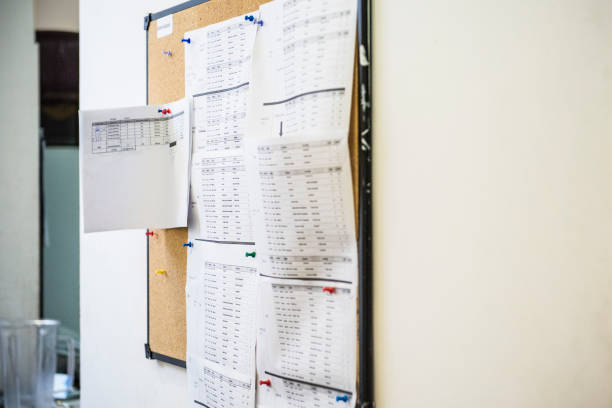
So you are getting ready to take the National Counselor Exam, or NCE. That is a big step. It is the test you need to pass to get your license and start helping people as a real therapist. I know it can feel scary. You might be wondering where to even begin. But let me tell you a secret: the best way to beat the NCE is not to cram the night before. It is to build a simple study schedule that fits your life. And I am going to walk you through exactly how to do that, step by step.
First, you need to know how much time you have. The NCE is not something you can just wing. Most people need at least two to three months of steady studying. So grab a calendar. It can be on your phone, on your wall, or even just a piece of paper. Mark the date of your test. Then count backward. That is your study window. Now, take a deep breath. You do not need to study eight hours a day. In fact, that is a bad idea. Your brain needs rest. A good goal is thirty to sixty minutes a day, five or six days a week. That is it. If you can do that for two or three months, you will be ready.
Next, look at your real life. You have a job, maybe kids, maybe chores, maybe just a need to watch your favorite show. Be honest with yourself. When are you at your best? For some people, mornings work great. For others, evenings after dinner are better. Pick a time you can stick with most days. Then block it off on your calendar. Treat that time like a doctor’s appointment. You would not skip a doctor’s appointment, right? So do not skip your study time. Tell your family or roommates, “Hey, from 7 to 8 p.m. I am studying. Do not bother me unless someone is bleeding.” That helps.
Now, what should you study? The NCE covers a lot of ground. There are theories, ethics, group work, and more. Do not try to learn everything at once. Break it down. For example, you could spend week one on counseling theories. Week two on human growth and development. Week three on ethics. You get the idea. Write down what topics you want to cover each week. That way you are not guessing what to study every day.
Here is a trick that works really well: mix up your studying. Do not just read a textbook for an hour. That gets boring fast. Instead, try fifteen minutes of reading notes, fifteen minutes of watching a video, fifteen minutes of answering practice questions, and fifteen minutes of reviewing what you got wrong. That keeps your brain awake. It also helps you remember things better because your brain is doing different things.
Speaking of practice questions, they are gold. You need to take practice tests early and often. Do not wait until the last week. Start after you have studied a few topics. Take a short quiz. See what you miss. Then go back and study those weak spots. That is way more helpful than just reading the same pages over and over.
Sometimes you will feel stuck. Maybe you do not understand a term like “countertransference” or you keep mixing up Carl Rogers and Sigmund Freud. That is normal. Do not panic. Just reach out. You can join a study group online or ask a friend who already passed the NCE. Even talking out loud to yourself can help. Explain the idea to your dog or your coffee mug. If you can say it in your own words, you know it.
Let us talk about taking breaks. Your brain is not a machine. It needs rest. So after every twenty-five or thirty minutes of studying, get up. Walk around. Get a snack. Stretch. Do not check your phone during the break because that can actually make you more tired. Just chill for five minutes. Then go back. This is called the Pomodoro technique, but you do not need to remember that fancy name. Just take short breaks.
One more thing: do not forget to take care of yourself. Studying for the NCE is stressful. You might feel like you have to study all the time. But if you are tired or hungry or upset, you will not learn well. So sleep enough. Eat good food. And give yourself a full day off each week. No studying at all. That is not lazy. That is smart. Your brain needs time to store everything you learned.
When test day gets close, do something different. In the last week, do not try to learn new stuff. Just review what you already know. Take one more full practice test. Get used to the timing. Then the night before the test, put your books away. Watch a funny movie. Go to bed early. You have done the work. You are ready.
I promise you, if you follow a simple study schedule like this, you will walk into that testing center feeling calm and prepared. You will pass the NCE. And then you will be one step closer to becoming the therapist you want to be. You got this.