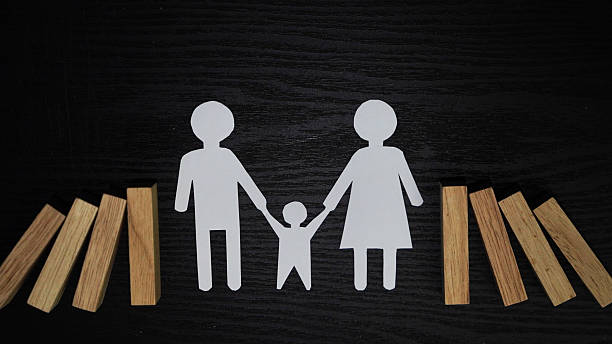
If you’re thinking about a career helping people, you might picture sitting with one person and talking about their problems. But family systems theory asks a powerful question: what if the problem isn’t just inside the person, but in the space between people? This idea is at the heart of marriage and family therapy, and it changes everything about how we offer help.
Think of a family like a mobile hanging over a crib. Each piece is connected by a string. If you tug on just one piece, every other piece moves and shakes. They are all part of one balanced system. Family systems theory sees families the same way. You can’t understand one person in a family without understanding their relationships. A teenager acting out isn’t just a “bad kid.“ They might be a piece of the mobile reacting to stress somewhere else, like tension between their parents or a sick grandparent. The behavior is a message about the whole system.
One key idea in this theory is that families have patterns. These are the unspoken rules and habits that everyone follows. For example, a pattern might be: “When mom gets stressed, dad becomes very quiet, and then the oldest child tries to make everyone laugh.“ These patterns happen over and over, often without anyone realizing it. Sometimes, these patterns get stuck in a unhealthy loop. A therapist using family systems theory acts like a detective for these patterns. They help the family see the cycle they are stuck in, so they can work together to create a new, healthier one.
Another important point is that problems often have a function. A child’s school refusal might be scary and frustrating, but in the family system, it might be accidentally serving a purpose. It might be the only thing that gets arguing parents to agree on something, pulling their focus away from their own conflict. The therapist’s job isn’t to blame anyone for this, but to help the family see this hidden function. Then, they can find a direct and healthy way to address the real issue, like the parents’ communication, so the child doesn’t have to “act out” to keep the peace.
Boundaries are a big part of this work, too. Healthy families have clear but flexible boundaries. Think of boundaries like fences between neighbors. A good fence is not a huge wall; it lets you talk and pass a cup of sugar, but it’s clear where your yard ends and theirs begins. In families, problems can happen when boundaries are too rigid (like a tall wall that cuts off all contact) or too loose (like no fence at all, so no one has their own space or role). A parent sharing all their adult worries with a ten-year-old has a boundary that is too loose. A family that never talks about feelings might have boundaries that are too rigid. Therapists help families adjust these boundaries to find a healthier balance.
For anyone looking at a career in therapy, this approach is powerful. It means you don’t have to find the “one sick person” to fix. Instead, you get to see the whole picture. You work with the connections, the patterns, and the dance between people. Your goal is to help the family become a team that can solve problems, support each other, and grow. You become a guide for the entire mobile, helping each piece find its place without pulling the others down. It’s a career about seeing the invisible threads that tie us together and helping people weave them into something stronger. At TherapyDegree.com, we can help you find the path to become that kind of guide, whether you’re just starting out or changing your career to make a real difference in the world of family therapy.