Imagine you are sitting in your living room, sipping coffee in your pajamas, while a professor on your laptop explains the different ways to help people with anxiety. Later that same week, you drive to a local clinic and sit across from a real person who is telling you about their life. You listen, you ask questions, and you start to learn what being a therapist actually feels like. That is the magic of hybrid programs. They give you the best of both worlds: the comfort and freedom of online learning, plus the real-world practice you absolutely need to become a great therapist.
Maybe you are thinking about going back to school, or maybe you are just starting out. Either way, you probably have a lot on your plate. A job, a family, a life. Nobody wants to quit everything just to sit in a classroom for two years. Hybrid programs understand that. You get to do most of your classwork from home, on your own schedule. You watch recorded lectures, join live discussions from your phone, and email your teachers questions whenever they pop into your head. The online part is flexible like that.
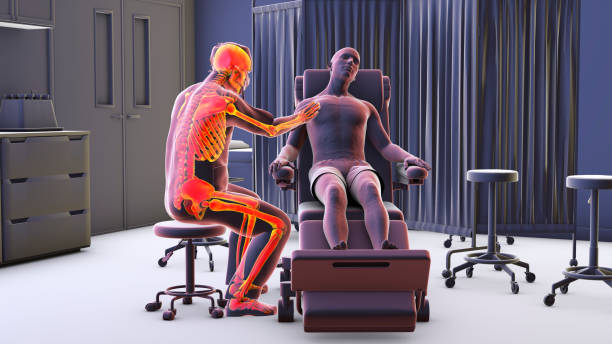
But here is the thing about therapy: you cannot learn it all from a screen. You need to practice talking to people face-to-face. You need to see how someone’s shoulders relax when you say the right thing, or how their eyes get watery when they talk about something hard. That is where the in-person part comes in. Hybrid programs call it the “hands-on” or “on-the-ground” part. You go to a training center, a community clinic, or sometimes even a school near you. There you work with real clients under the watchful eye of a supervisor who has been doing this for years. This is where you turn book knowledge into actual skill.
Let me tell you a story. My friend Tina wanted to become a marriage counselor, but she worked full-time at a grocery store and had two kids. She thought she would have to give up her dream. Then she found a hybrid program. She took her theory classes online at night after the kids were asleep. On weekends, she spent a few hours at a local counseling center doing practice sessions with volunteer clients. It was not easy, but she did not have to quit her job or hire a babysitter every day. Within three years, she had her degree and a new career. Hybrid made it possible.
Now, you might wonder if these programs are as good as the old-fashioned all-in-person programs. The short answer is yes, if you pick a good one. Many hybrid programs are accredited, which means they meet the same high standards as any other school. You learn the same things: how to listen without judging, how to ask questions that help people open up, how to spot the signs of deep depression or trauma. The difference is just how you get that learning. Online for the theory, in person for the practice.
Another thing I love about hybrid programs is that they prepare you for the real world of therapy. When you finally graduate and get your license, you will probably work in an office or a clinic. You will sit with clients one-on-one, just like you did in your in-person training. And you will also do paperwork, attend meetings, and sometimes take online training courses. Hybrid school gets you ready for that mix of digital and face-to-face work. You learn to be comfortable with both.
Of course, hybrid programs are not for everyone. If you love being in a classroom every day, or if you have a hard time staying motivated without a teacher standing over you, then maybe a fully in-person program would fit better. But if you are like most people I talk to, you want something that bends to your life, not the other way around. Hybrid gives you that bend. It gives you the freedom to learn at your own pace, while still getting the hands-on experience that turns a student into a helper.
And that is really what this is all about, right? You want to help people. You want to be the person who listens when nobody else will. That takes training, dedication, and a lot of heart. Hybrid programs respect that. They do not ask you to put your whole life on hold. They say, “Come as you are, learn wherever you are, and we will make sure you get the practice you need.”
So if you are thinking about becoming a therapist, do not let fear of losing your job or your free time stop you. Look into hybrid programs. They blend the flexibility of online learning with the realness of in-person work. They are a smart, kind, and practical way to start your new career. And maybe someday, someone will sit across from you, and you will know exactly what to say because you practiced it in your living room and then in a real room with a real person. That is the power of hybrid.