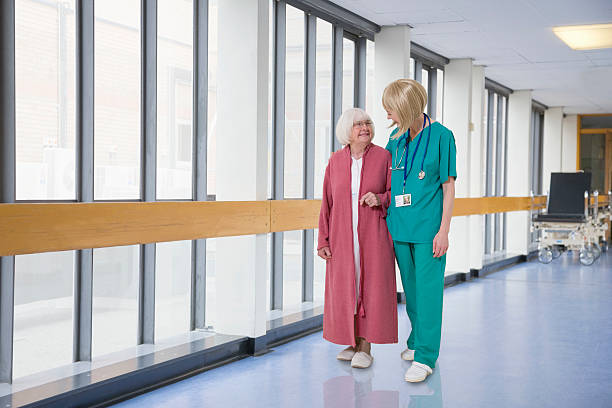
Imagine you are lying in a hospital bed. You just had surgery, or maybe you came in because of a bad fall. The doctors and nurses are taking care of your body, but your mind is spinning. Who will feed your dog? How will your kids get to school tomorrow? Can you pay for all this? That is where a medical social worker steps in. They are the person on the hospital team who helps you with the stuff that medicine cannot fix.
When I first started working in a hospital as a social worker, I thought I would just talk to people about their feelings. And I do that. But it is so much more. Every day I help patients and their families through some of the hardest moments of their lives. And the best part is, I do not need a fancy degree or a big title to make a real difference. If you love helping people and can keep your cool when things get messy, this job might be for you.
Let me tell you about one morning that will stick with me forever. A woman named Sylvia was brought in after a car accident. She was scared and confused, and her husband was in the waiting room not knowing if she would be okay. I went to talk to him first. He was shaking. He told me they were new to the city and had no family nearby. He had to call his boss to say he would not be coming in, but he did not know how to ask for time off. He was worried about money and about who would take care of their kids. I sat with him for twenty minutes. I helped him call his boss, found a list of free daycare options, and got a social work intern to bring him a sandwich. By the time the doctor came to give him good news about Sylvia, he was calm enough to hear it. That is what we do. We take the chaos and turn it into a plan.
In a hospital, medical social workers are like the glue that holds everything together. We work with the doctors and nurses to make sure the whole person is cared for, not just their broken bone or infection. When a patient is ready to leave, we help them find a rehab center, a home health aide, or a way to pay for medicine. We also help families make hard choices, like when a loved one is very sick and cannot get better. We listen, we explain things in simple words, and we give people a shoulder to cry on without judging them.
You do not have to be a superhero for this job. You just need to care about people and be willing to learn. I remember my first week on the job. A young mom was getting discharged with her new baby, but she had no car seat. I had no idea what to do. So I called around and found a local charity that gave out free car seats. She left with her baby safe and happy. That feeling? You cannot buy it. Every day brings a new puzzle, and every puzzle is about helping someone feel less alone.
Some days are hard. I have had to tell families that their loved one will not wake up. I have sat with people who could not stop crying. But I have also seen miracles—like the man who was homeless and left the hospital with a job and a room because we worked with a shelter to get him back on his feet. The hospital is a place where life and death mix together, and being a social worker means you get to be the person who brings hope into the middle of that mix.
If you are thinking about a career in social work, and you like the fast pace of a hospital, this path is a good one. You do not need to know everything on day one. You learn by doing. And you will have a team of nurses, doctors, and other social workers who have your back. You will also get to see people at their most real. There is no pretending in a hospital bed. The families you help will remember your kindness for the rest of their lives.
So if you want a job where you can use your heart and your brain together, where no two days are the same, and where you truly make a difference, consider medical social work in a hospital. You do not need a magic wand. You just need two ears, a caring voice, and a willingness to help people figure out their next step. Trust me, it is worth it.