So you just graduated, and now you are ready to start seeing clients from the comfort of your own home. That is super exciting. You get to help people without leaving your living room. But wait – where exactly are you going to sit and talk to them? Your bed? Your kitchen table? Your couch? Maybe, but probably not for long. Having a good space to do telehealth therapy makes a huge difference for both you and the people you help. Let me walk you through what to think about.
First, you need a place that is private and quiet. You cannot have your roommate walking in halfway through a session. Your dog barking is okay sometimes, but not all the time. Find a room with a door that closes. If you do not have a whole extra room, a corner of your bedroom can work. Just make sure nobody else can see or hear what is happening. Your clients are sharing personal stuff with you, and they need to feel safe. That means no family members walking behind you or yelling from the other room.
Now let’s talk about what you look like on camera. You do not need fancy lights or a TV studio. But good lighting is a must. Sit facing a window if you can. Natural light makes you look warm and friendly. If it is nighttime or your room is dark, put a lamp in front of you, not behind you. If the light is behind you, your face will be in shadow and that feels creepy. Also, make sure your camera is at eye level. Stack some books under your laptop if you need to. That way you are not looking down at your client like you are reading a menu. You want to look right at them, like you are having coffee together.
What about your background? You do not have to have a therapist office with diplomas on the wall. A plain wall is fine. A bookshelf with a few books and a plant is nice. Just avoid messy piles of laundry behind you. Also, think about what your background says about you. If you have a big poster of a rock band, that might be distracting. Keep it simple and clean. Some people use virtual backgrounds, but those can glitch and make you look fuzzy. A real background works better.
Now here is a big one: sound. Your microphone matters a lot. Your clients need to hear you clearly, and you need to hear them. Laptop mics are okay, but sometimes they pick up background noise like the refrigerator humming or a truck outside. A simple headset with a mic can fix that. Or you can buy a cheap USB microphone. Put a rug on the floor if you have hard floors. That helps stop echo. Also, close your windows if there is traffic. Your clients will feel more connected if they can hear every word without asking you to repeat yourself.
Do not forget about your internet connection. You cannot do therapy if your video keeps freezing. Test your internet speed before you start seeing clients. If it is slow, maybe move closer to your router. Or buy a wifi extender. A wired connection is best if you can plug in. Nothing ruins a good therapy session like a frozen screen right when a client is crying.
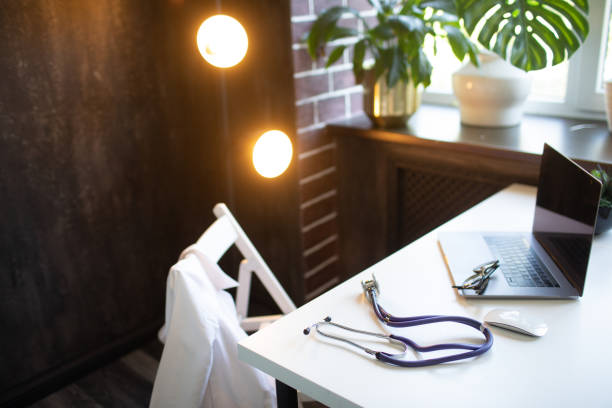
Now let me talk about you. Your comfort matters too. You are going to sit in that chair for hours. Do not use a stool or a hard dining chair. Get a good desk chair that supports your back. Keep a water bottle nearby. Put a plant on your desk so you have something nice to look at. Also, have a little routine before you start sessions. Light a candle, take a deep breath, and get yourself in the right headspace. You are not just sitting at a computer. You are doing real, important work.
One thing I learned the hard way: make boundaries between your work zone and your home zone. If you use your bedroom for therapy, try to cover your bed with a blanket or put up a screen. You do not want to feel like you are always at work in your sleeping space. When your workday ends, pack up your laptop and put it away if you can. That helps your brain know it is time to rest.
Also, think about how your space makes clients feel. You want it to feel welcoming through the screen. That might mean having a warm light behind your camera instead of a harsh ceiling light. It might mean wearing something comfortable but professional. You do not need a suit. A nice shirt in a solid color works fine. Avoid stripes or busy patterns because they can wiggle on camera.
I remember my first week doing telehealth from home. I sat at my kitchen table. There were dishes in the sink behind me. I had bad lighting. My cat jumped on my keyboard during a session. It was a mess. But I learned. Now I have a little corner with a nice lamp, a plain wall, and a good chair. My clients tell me they feel more relaxed because my space is calm. That makes me happy.
You can start small. Do not feel like you need to buy everything all at once. Just get a few basics: a quiet place, a decent camera angle, good lighting, and an internet connection that works. Then improve over time. Your clients will appreciate that you care about making them feel comfortable.
And remember, you are the therapist. Your personality is what matters most. The space is just a helper. You could be in a cardboard box, and if you are kind and listen well, your clients will still get help. But having a nice home office makes it easier for you to focus and for them to trust you. So take a little time to set it up right. You will feel more professional, and your clients will feel more safe. That is a win for everyone.
Good luck out there. You got this.